
Yale’s one-year IDE Master’s Program exposes students to a quantitative approach to economics, and prepares them to make an impact in global development.
Attend an information session
We periodically host live webinars featuring faculty directors and alumni.
We’d love to meet you and share more information about the program.
Study Economics at Yale. Make an Impact Around the World.
Embark on an intensive one-year master’s journey designed to equip you with the tools to navigate the complexities of today’s global development landscape. The International and Development Economics (IDE) program at Yale University offers rigorous training in quantitative analysis, preparing you to tackle real-world economic challenges head-on. The foundation of the IDE curriculum is a series of five core classes in which students develop essential competencies in microeconomics, macroeconomics, econometrics, and development economics.
Beginning with the 2022-23 application cycle, EGC has sponsored scholarships to eligible, promising applicants through its Sub-Saharan African Student Scholarship program.
Why Choose IDE at Yale?
- One-Year Master's in Economics: Complete rigorous graduate training in one intensive year with our focused and demanding program.
- Quantitative Training: Build graduate-level skills in econometrics, microeconomics, and macroeconomics — the foundation for PhD study and technical policy work.
- Electives Across Yale: Take courses at the School of Management, Jackson School of Global Affairs, School of the Environment, and Yale Law School.
- Research Opportunities: Contribute to active economics research through paid IDE Research Assistantships with Yale faculty — experience that strengthens PhD and predoc applications.
- Small Cohorts: With 30–35 students per year, you work directly with faculty and receive close advising on coursework, research, and next steps.
- Joint Degree Option: Earn the IDE degree alongside an MPH from the Yale School of Public Health or a master's from the Yale School of the Environment in 2.5 years.
- Global Perspectives: Study alongside classmates from across the globe who bring firsthand knowledge of the economies you'll analyze.
- STEM Designation Benefits: International students are eligible for upto 3 years of US work authorization after graduation (1 year of OPT plus the 2-year STEM extension).
- The Economic Growth Center: Engage with EGC, Yale's hub for research on growth and poverty — attend the annual Kuznets Lecture and EGC conferences that bring leading economists and policymakers to campus.
- Yale's Graduate Community: Join a network of 5,000+ graduate students across 13 professional schools and 70+ fields of study.
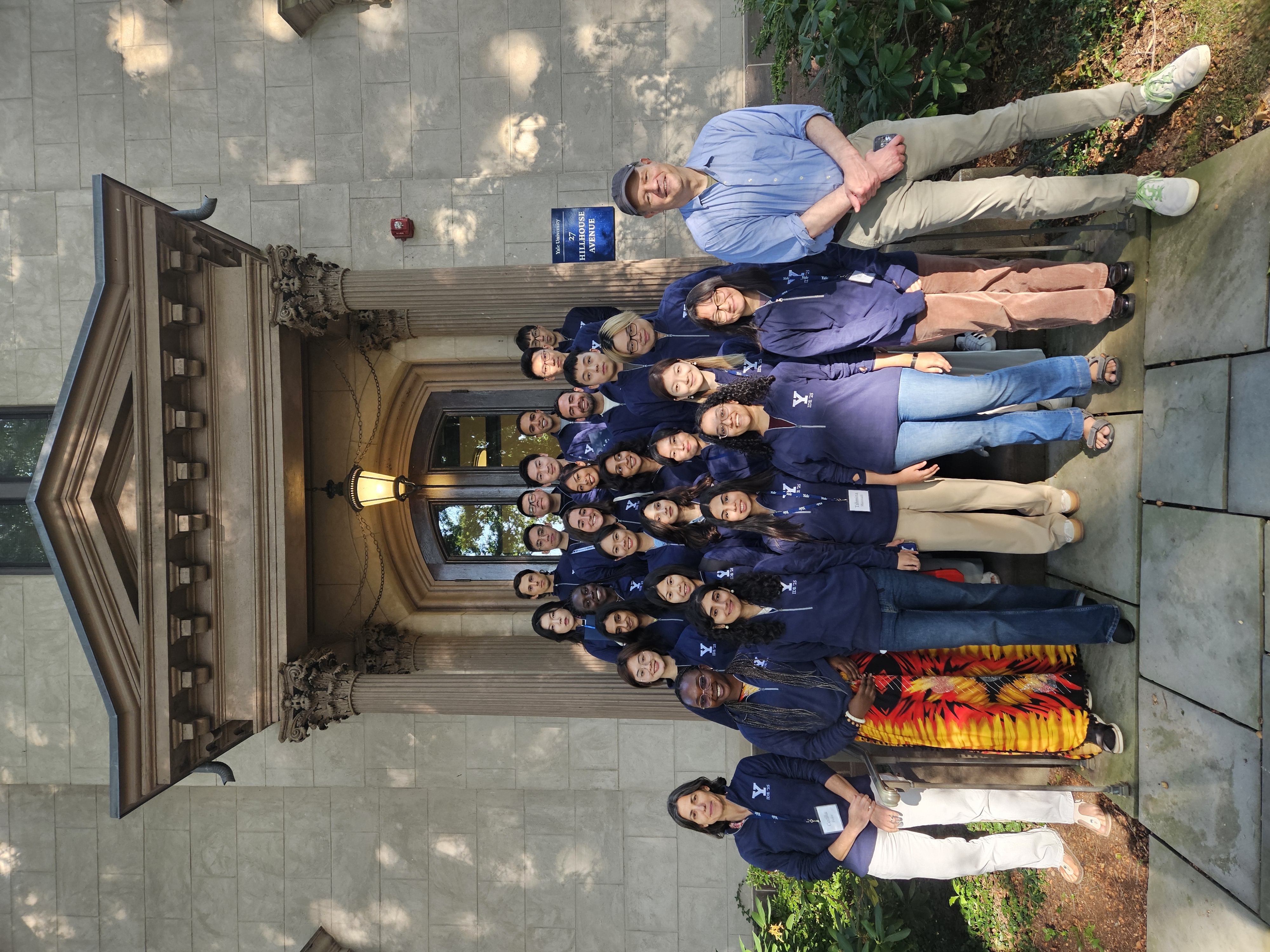 Credit: Anna Groesser
IDE '25
We periodically host live webinars featuring faculty directors and alumni. We’d love to meet you and share more information about the program.

Explore the Possibilities
Join the ranks of our alumni who, over the past 65 years, have made impactful contributions across all global development sectors.


IDE gave me a more disciplined way of thinking about inference, causality, and evidence. That foundation in econometrics and the reasoning skills that came out of the core classes have been what I’ve leaned on most across my career so far."

IDE by the numbers
*Based on survey responses from 24 out of 27 IDE '25 graduates.
is the home at Yale for economic research on global development and poverty reduction. EGC researchers are applying rigorous methods to understand not only the links between economic growth and poverty, but also how rising inequality and a changing climate affect individual wellbeing, especially among marginalized groups in developing countries.

About New Haven
"Connecticut’s third-largest city is a historic, mostly walkable and bikeable seaside town with distinctive neighborhoods, an encyclopedic collection of great American architecture, a thriving cultural life and one of the best food scenes in the country for a city of its size (134,000)." Read more about New Haven in the New York Times' 52 Places to Go.
Yale graduate students have many options for affordable, comfortable, and convenient places to live in greater New Haven while at Yale. You can live on-campus, in Yale-owned off-campus apartments, or in off-campus apartment buildings and homes in several neighborhoods. While most graduate students live on or near campus in New Haven, some live in surrounding towns and commute to campus. Read more about life in New Haven.



Discover how the IDE program can shape your future. Visit the Yale Graduate School of Arts and Sciences (GSAS) for detailed information on the application process, campus life, and the myriad resources available to you in New Haven.
Subscribe to International and Development Economics
If you would like to sign up for an upcoming IDE webinar or information session, please fill out the form below.